ROUX
An ADHD Companion for Mindful Eating and Effortless Meal Planning
Services
#
Product Marketing
#
Product Strategy
#
0-to-1
Opportunity
A $1.5B market with a massive blind spot
Meal planning apps are a $1.5 billion industry. And almost none of it was built for how ADHD brains actually work. Mainstream apps prioritize rigid structure and endless options, which, for neurodivergent users, doesn't feel like flexibility; it feels like a wall. The market gap wasn't a missing feature. It was a missing understanding of who the user actually was.
Diagnosis
Before building anything, I needed to understand why existing tools were failing this audience. I ran competitive analysis across four dominant apps and qualitative interviews with ADHD users across three different life contexts.
01 - Time blindness creates disproportionate stress around meal timing. It's not that users forget to eat; it's that time itself feels unpredictable.
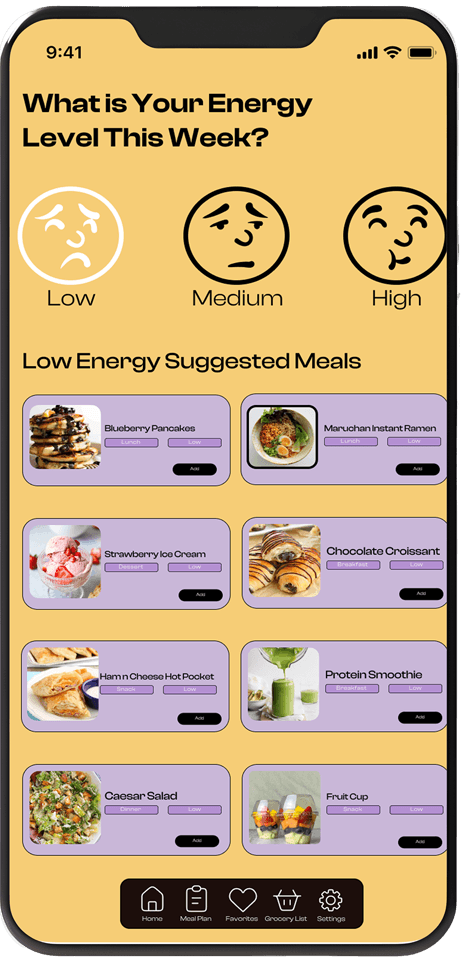
02 - Energy levels fluctuate depending on mental fatigue, making meal planning feel impossible at the exact moment it's needed most.
03 - More options don't help; they cause decision paralysis and lead to abandoning planning altogether.
Every existing competitor—MyFitnessPal, Paprika, and Plan to Eat—is optimized for volume. More recipes, more tracking, more control. The research said the opposite was true. ROUX's positioning came down to one idea: fewer decisions, better defaults, more joy. Not another planner. An ADHD companion.
Solution
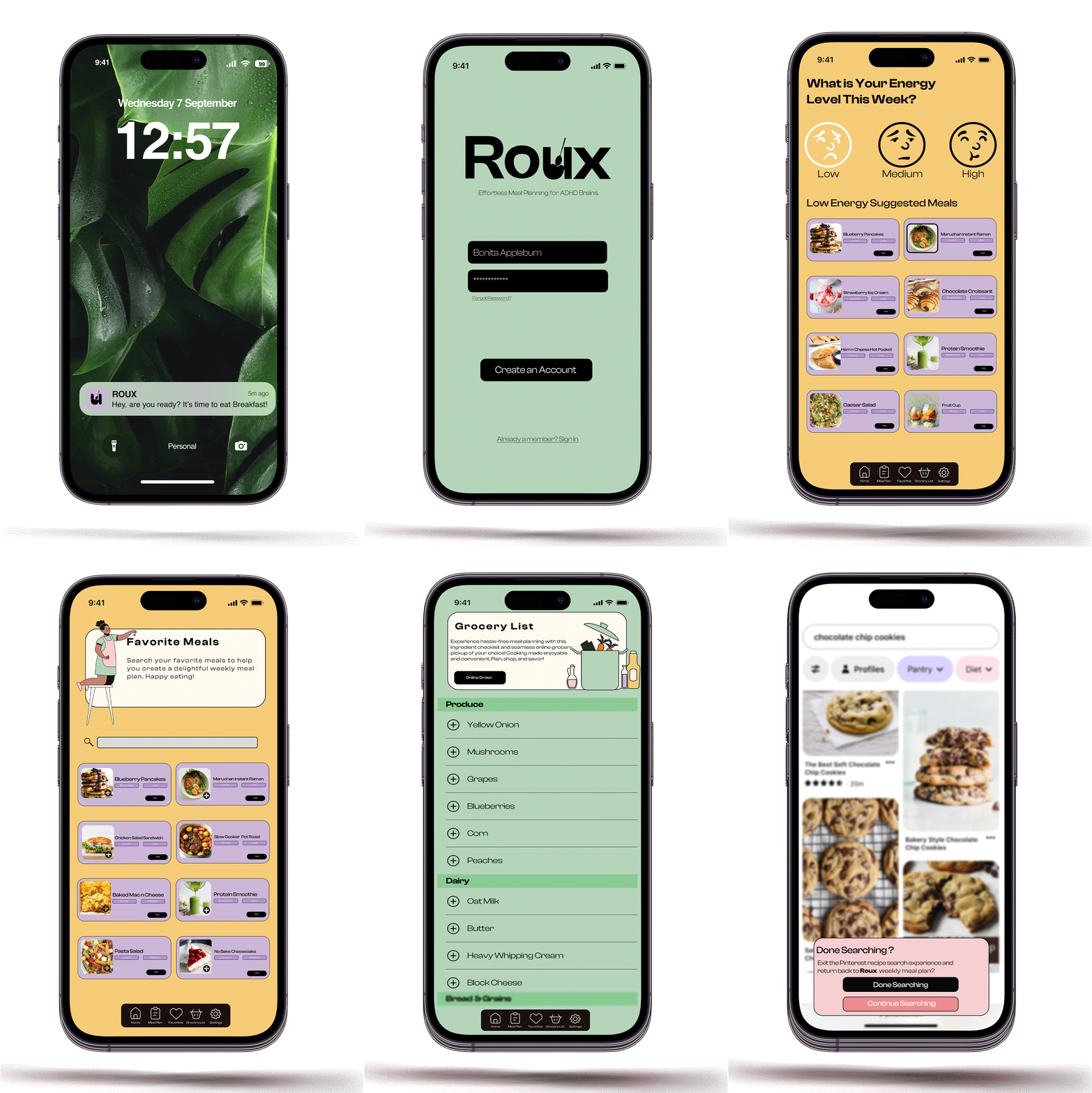
Every feature in ROUX traces directly back to something the research said.
Weekly view instead of monthly because the research showed monthly planning triggers overwhelm before you even start.
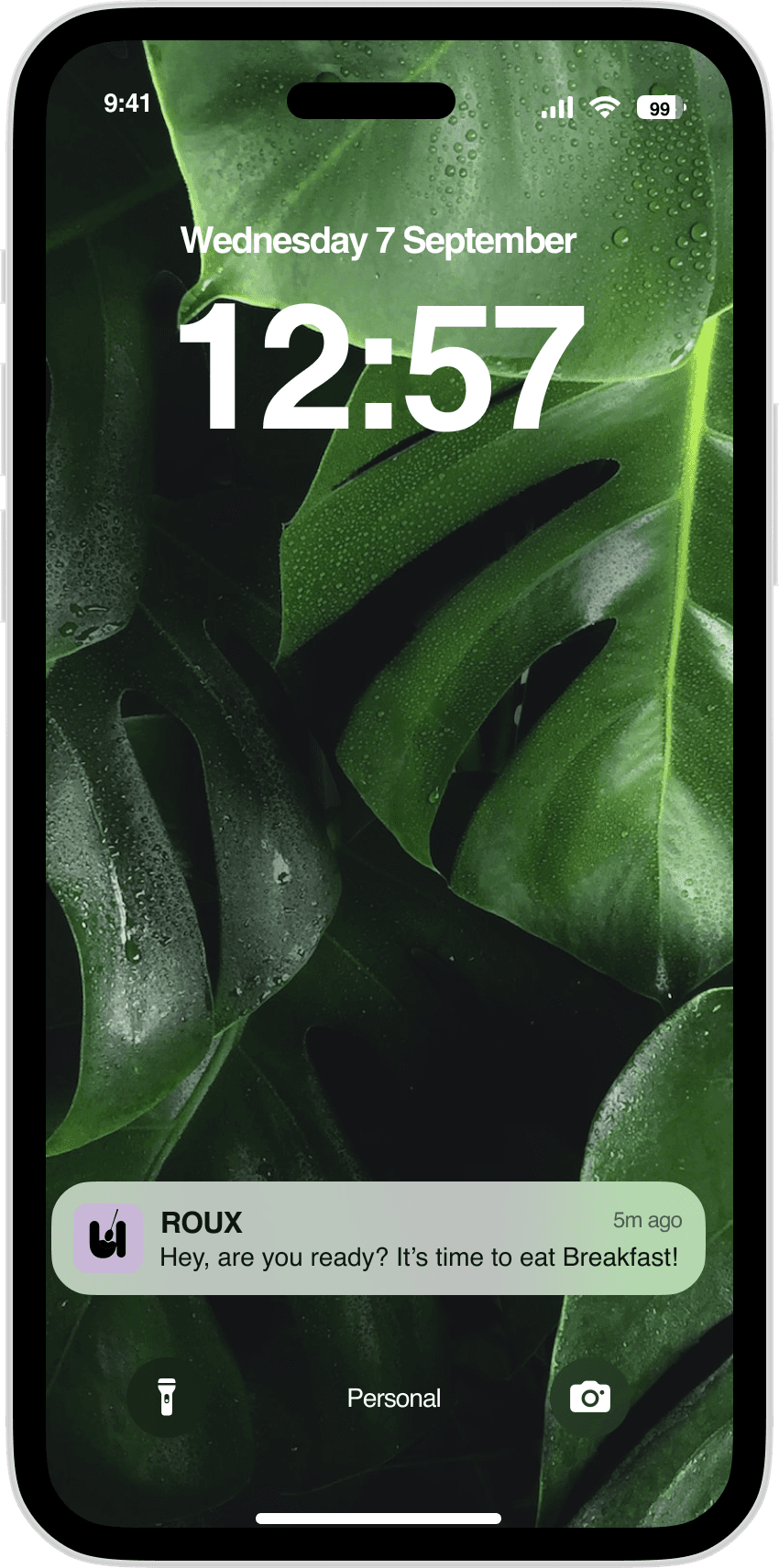
Adaptive reminders instead of scheduled ones because a brain that's learned to ignore rigid notifications needs something that responds to it.
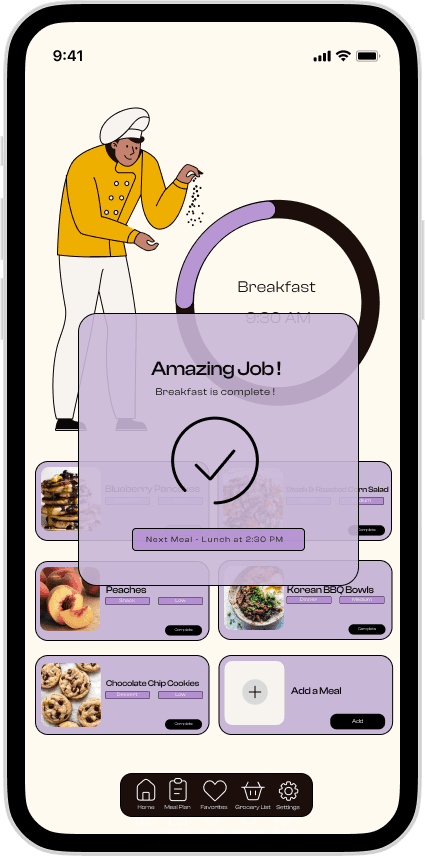
Positive affirmations instead of guilt prompts because users view eating as a reset moment, not a task to check off.
Automated grocery lists because reducing steps between decision and execution is the whole point.
This was a 0-to-1 project. Everything from research and design to positioning to feature prioritization came from the strategic foundation built during discovery. The result was a fully interactive Figma prototype demonstrating a complete end-to-end consumer behavior system.
15+ user interviews · 4 competitors analyzed · 0 to 1 fully interactive prototype