Grammarly
Where Grammarly Meets Structure — A Formatting Friction Point Analysis
Services
#
Product Strategy

Opportunity
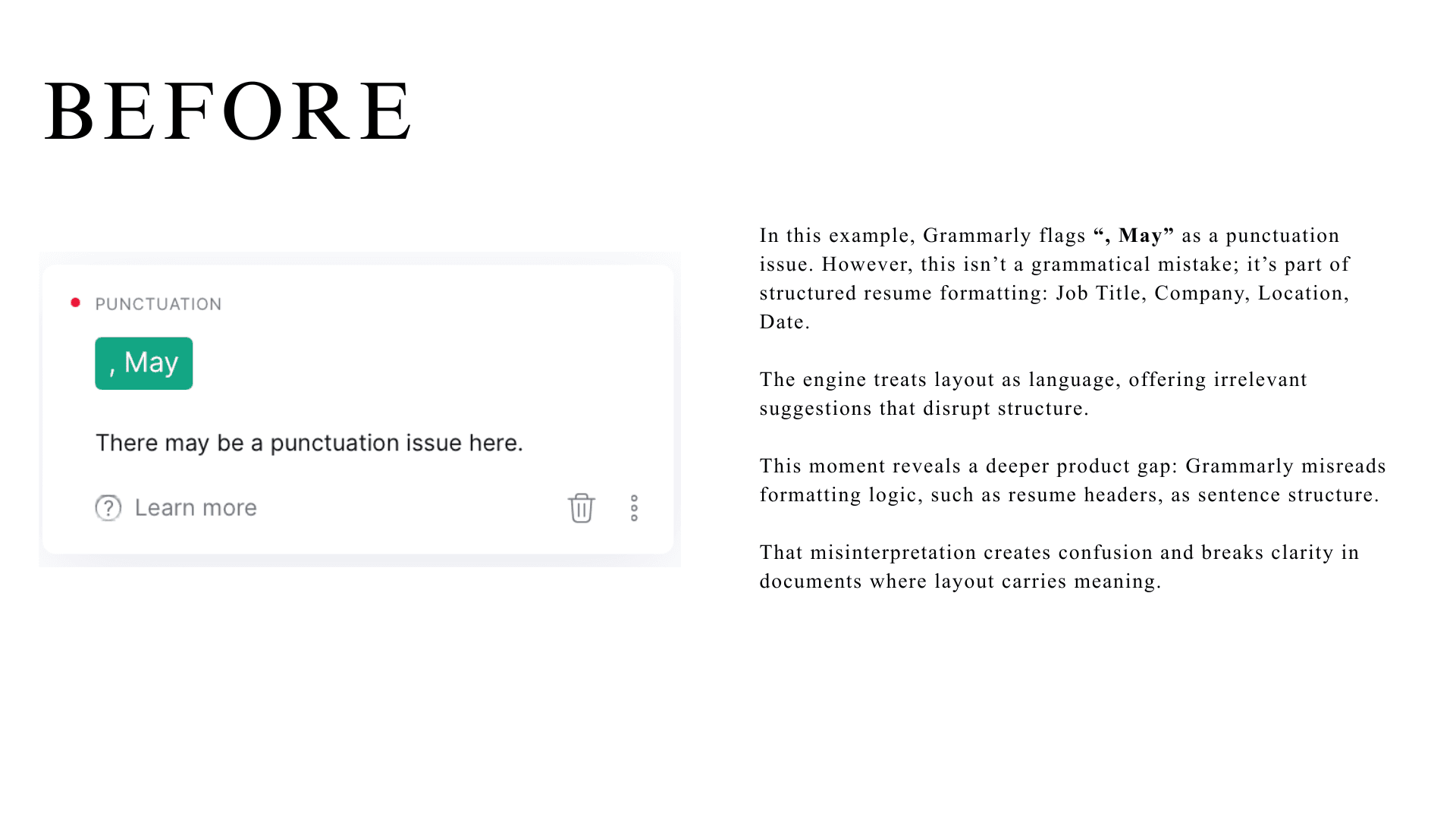
While applying to jobs and revising my resume, I noticed Grammarly's plug-in was misreading structured formatting as grammar errors. Not a bug, a gap. Grammarly's mission is to make communication clearer. But in high-stakes documents like resumes, cover letters, and legal memos, it was doing the opposite.
Diagnosis
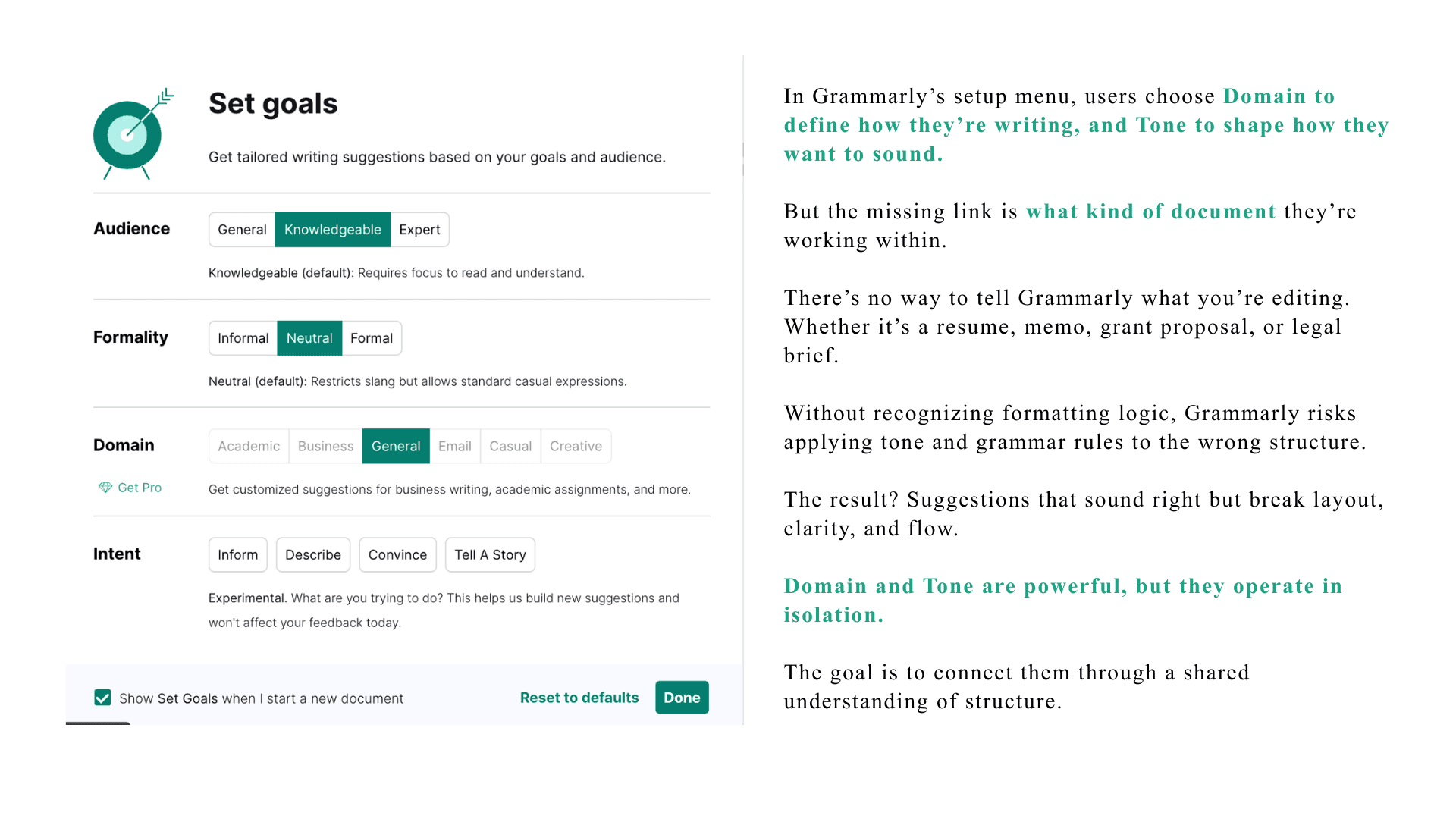
The problem wasn't the grammar engine. It was that Grammarly had no way to distinguish layout from language. Domain tells it how something is said. Nothing tells it what kind of structure it's working within. When layout gets treated like language, clarity breaks down exactly when it matters most.
01—Structure carries meaning Resumes use spacing to signal hierarchy. Proposals rely on section headers to guide decisions. Grammar rules alone can't preserve that.
02 — Friction lives in the plug-in Grammarly is most active in Word and Google Docs, the exact platforms where layout matters most. That's where the damage happens.
03 — Layout mistakes cost real opportunities One broken header or misaligned section can cost credibility in a job application or business proposal. Format-aware editing isn't just helpful; it's protective.
04 — Domain optimizes voice, not structure Domain sets how something is said. It doesn't recognize how it's structured. Those are two different problems.
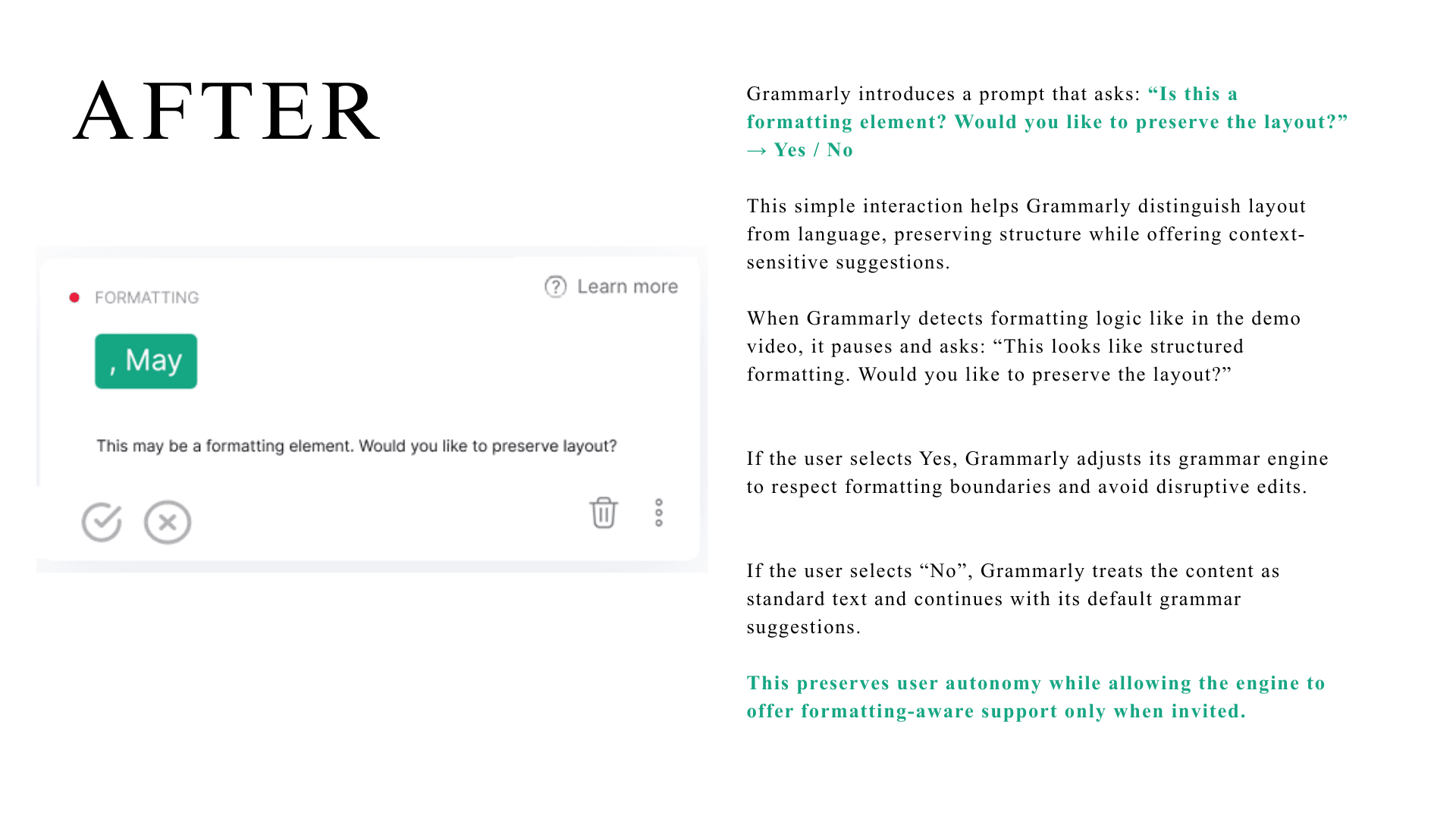
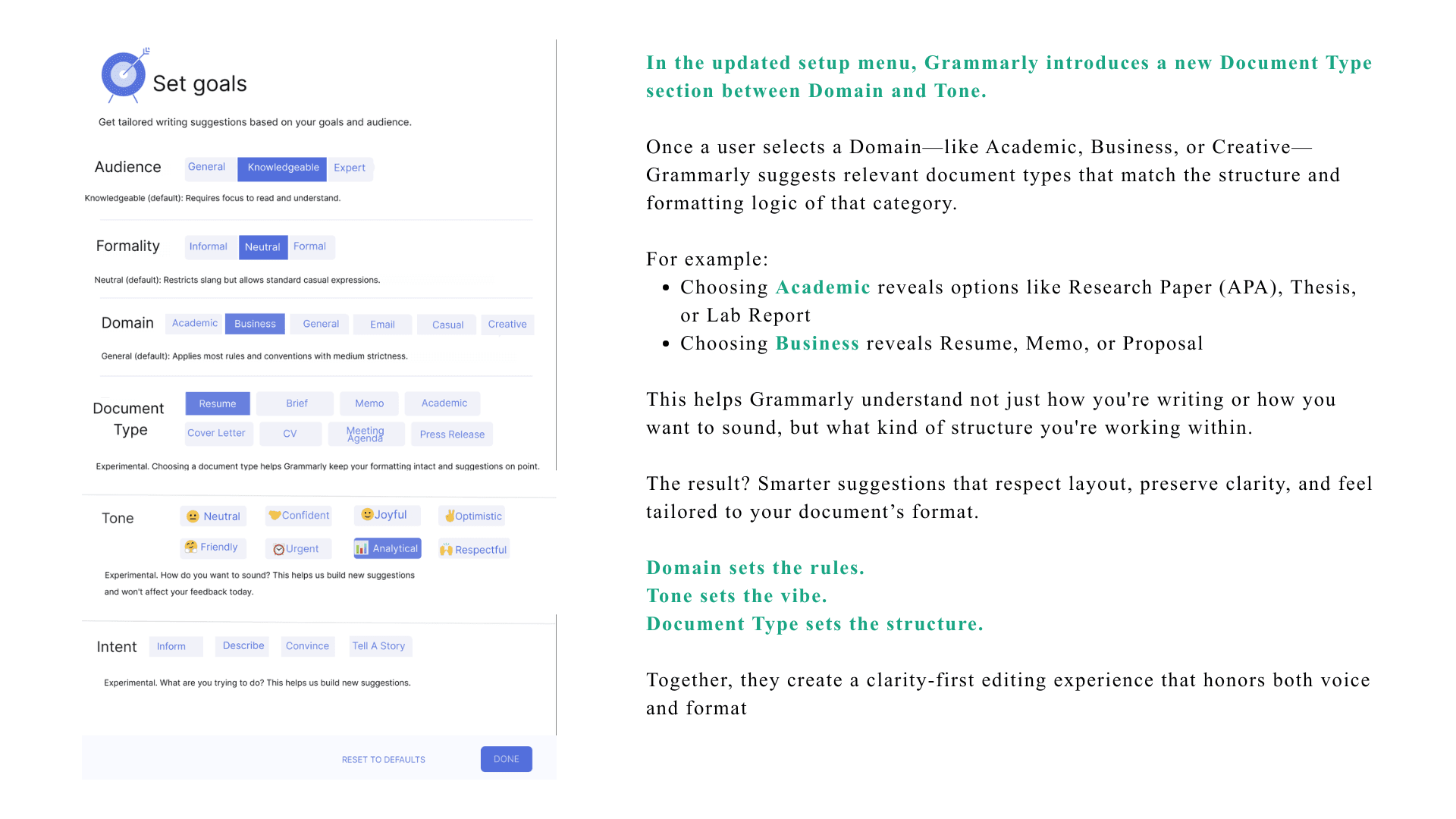
A small shift in interface. A big leap in clarity. Two proposed features, a formatting-aware prompt at the point of detection and a document type selector in the setup menu, together give Grammarly the structural context it's missing.
Domain sets the rules. Tone sets the vibe. The document type sets the structure.
Solution
An unsolicited friction point analysis and feature recommendation for an existing product, built independently, with no brief, no client, and no ask. Just a gap worth solving.
Two proposed features with mocked-up UI showing before-and-after states, a domain vs. document type comparison matrix, and a five-point strategic case for why this gap matters now.